Author: Gift Onyinyechi

  • Prince Abubakar Audu University Cut-off Mark Courses and Requirements

    Prince Abubakar Audu University Cut-off Mark Courses and Requirements

    The majority of students who want to gain admission into Nigerian universities tend to ask about the cut-off mark, courses, and admission requirements. If you are one of those students, and your dream university is Prince Abubakar Audu University, then this post is for you.

    Prince Abubakar Audu University, PAAU, is one of the well-known state universities in Kogi State, Nigeria. It attracts thousands of admission seekers every year because of its decent teaching, affordable tuition fees compared to private universities, and the presence of a wide range of courses.

    But before you can secure an admission slot in this university, you need to know the cut-off mark, courses, and admission requirements. They are the deciders of whether you are eligible for admission or not. Let’s do it step by step.

    Prince Abubakar Audu University Overview

    Prince Abubakar University, formerly Kogi State University, Anyigba, Kogi State. Kogi state government established this University as a state university. The university was renamed in 2020 after the current governor, Prince Abubakar Audu, and has since grown to become what it is today.

    Read Also – Bamidele Olumilua University Cut-off Mark | Courses, Cut-off Mark and Requirements 

    What is the Cut-off Mark for Prince Abubakar Audu University?

    The cut-off mark is the minimum mark you must score in the JAMB UTME exam before you can be eligible to apply for admission.

    For Prince Abubakar Audu University, the cut-off mark is 150 for most of the courses. That is, if you have scored 150 and above in JAMB, you can apply for most of the courses offered by the institution.

    However, for very competitive courses like Law and Nursing Science, the cut-off mark is 200. The reason for this is simple — these courses attract thousands of applicants every year, but the available slots are limited. To make sure only the best candidates get in, the school sets a higher cut-off mark.

    So, if you are aiming for Nursing or Law at Prince Abubakar Audu University, your JAMB target should not be 150 alone. You need to work harder and aim for above 200 to stand a better chance.

    Note, however, that the cut-off mark is only the beginning. Admission also looks at how you performed in the Post-UTME and your O’level results.

    Prince Abubakar Audu University Admission Requirements

    Prince Abubakar Audu University (PAAU) has established the following admission requirements for the 2025/2026 academic session:- 

    UTME Candidates

    • Candidates must make PAAU their first choice in the Unified Tertiary Matriculation Examination (UTME).
    • A minimum UTME score of 150 can be considered.
    • Candidates must have at least five (5) credit passes in relevant subjects, including English Language and Mathematics, in not more than two sittings.
    • Candidates should ensure they have the correct UTME subject combination for their proposed course.

    PAAU has abolished the former post-UTME screening exercise and now holds an online screening exercise. Candidates should register and upload their O’Level results on the university portal within the specified period.

    Direct Entry Candidates

    • Candidates should possess at least an Upper Credit in National Diploma (ND), National Certificate of Education (NCE), or its equivalent qualifications.
    • Applicants must have at least five (5) credit passes in relevant subjects, which must include English Language and Mathematics, at not more than two sittings. 

    Candidates who meet the Prince Abubakar Audu University cut-off marks and also fulfill the admission requirements should go ahead to apply for admission when the admission forms are out, they stand a very good chance of being admitted.

    Also Read – Caleb University School Fees | 2025/2026 Updated Guide 

    List of Courses Offered in Prince Abubakar Audu University (PAAU)

    Some of the undergraduate courses offered in PAAU are given below. The list is based on official sources and recent data.

    Faculty / AreaCourses Offered
    Agriculture & Related SciencesAgriculture; Agricultural Engineering; Animal & Environmental Biology; Soil Science; Fisheries & Aquaculture; Food Science & Technology; Forestry; Home Science; Home Science & Management; Agricultural Economics & Extension
    Natural SciencesBiochemistry; Chemistry; Physics; Geology; Mathematics; Industrial Chemistry; Microbiology; Plant Science & Biotechnology; Mathematical Sciences; Statistics
    Engineering / TechnologyMechanical Engineering; Applied Physics; Electrical/Electronics Engineering; Architecture (if offered)
    Health Sciences / Medical-RelatedAnatomy; Medical Laboratory Science; Nursing/Nursing Science; (Medicine & Surgery is listed among courses in some listings)
    Management / Social SciencesAccounting; Banking & Finance; Business Administration; Public Administration; Economics; Political Science; Sociology; Mass Communication; Geography & Planning; Library & Information Science
    EducationEducation & Biology; Education & Chemistry; Education & Mathematics; Education & Physics; Education & English Language; Education & Economics; Education & Geography; Education & Islamic Studies; Education & Christian Religious Studies; Education & Political Science; Teacher Education Science; Education Foundations & Management; Social Studies Education; Human Kinetics & Health Education
    Arts & HumanitiesEnglish Language & Literary Studies; History & International Studies; Arabic Language & Literature; Philosophy; Islamic Studies; Christian Religious Knowledge; Theatre Arts; Fine & Applied Arts; French (if offered)
    LawLaw (Common Law); Islamic / Sharia Law
    Others Specialized / InterdisciplinaryUrban & Regional Planning; Vocational & Technical Education; Soil Science; Religious Studies; Physical & Health Education; Home Science & Management; Education Administration & Planning

    Which Courses in Prince Abubakar Audu University Have Higher Cut-off Marks?

    Although most courses in Prince Abubakar Audu University make use of the 150 JAMB cut-off, some courses are exceptional because they are competitive in nature. These include:

    • Law (has a JAMB cut-off of 200)
    • Nursing Science (has a JAMB cut-off of 200)

    Both of these subjects are hotcakes. Thousands of students want to study them every year, but the school only has a few hundred spots available. Because of that, the school raises the cut-off to screen out weaker students early.

    If you are targeting Law or Nursing, don’t just try to meet the cut-off. Attempt to be at least 20–30 marks above the cut-off. For instance, a JAMB score of 220–240 places you in a better position than another candidate who scored exactly 200.

    Other programmes like Education, Arts, Social Sciences, and Agriculture are typically 150. But even in these, certain programmes may become competitive depending on the year’s demand.

    Read Also – Unilag Cut Off Mark for All Courses

    How to Calculate PAAU Aggregate Cut-Off Mark?

    The steps below are what was released by Prince Abubakar Audu University management for the calculation of PAAU aggregate score.

    • Divide your Joint Admissions and Matriculation Board (JAMB) score by 8.
    • Divide your Post UTME screening exercise score by 2.
    • Combine both your JAMB and Post UTME screening exercise scores.
    • The score that you have is your aggregate score.

    Also Read – Adekunle Ajasin University Admission | Requirements and Procedures

    How Do I Apply for Post-UTME at Prince Abubakar Audu University?

    The application is simple and online. Here’s the step-by-step process:

    • Visit the school portal: eportal.paau.edu.ng/ug/candidate.
    • Log in using your JAMB registration number.
    • Fill out the Post-UTME form with your personal and academic details.
    • Upload your O’level result(s).
    • Pay the screening fee (usually N2,000) online.
    • Submit the form and print your confirmation slip.

    After completing your application, the school will announce the screening date. Sometimes it may be a written test, while other times it may be a strictly online verification of documents. Always check the official portal for updates.

    Frequently Asked Questions

    What is the Post-UTME fee?

    The Prince Abubakar Audu University Post-UTME fee is usually ₦2,000. It is paid upon registration for the screening exercise and is required of all candidates. The fee is for the processing of your application and access to the screening portal.

    Does Prince Abubakar Audu University accept second-choice candidates?

    No, the university does not accept students who put it as a second choice. You must have Prince Abubakar Audu University as your first choice during your JAMB UTME registration to be considered for admission. This qualifies your application and processed.

    Can I use awaiting results?

    Yes, the school takes candidates who are awaiting results. It is, however, important that you upload your O-level results (WAEC, NECO, or equivalent) on the JAMB portal as soon as it is out. Without uploading, your admission won’t be processed even when you have reached the cut-off mark.

    What if I didn’t reach the cut-off mark?

    If you don’t have the cut-off mark, there are still options for you. You can either change to a less competitive course with a lower cut-off mark, or prepare well and re-sit JAMB the next year. Some candidates also seek other universities with lower cut-off marks.

    Conclusion

    Gaining admission into Prince Abubakar Audu University requires planning and understanding of the process. The cut-off mark is the beginning, yet it is not the only prerequisite. You also need good O’level grades, the appropriate subject combination, and timely application.

    Competitive courses like Nursing and Law need higher scores, so if that is your dream, be excellent in both O’level and JAMB. For other courses, 150 and above with good results can get you a fair chance.

    References

    Recommendations

  • How to Get Schengen Visa for Green Card Holders | Full Guide

    How to Get Schengen Visa for Green Card Holders | Full Guide

    If you are resident in the United States and plan to travel to Europe, the initial thing to know is that your green card by itself is not enough to get into the Schengen Area. You will still need know how to get a Schengen Visa for Green Card Holders if your place of origin requires it.

    Most travelers are perplexed since they assume that a U.S. green card automatically qualifies you to travel for free in Europe, but that is not so. Your green card only confirms your legal home in the U.S., while your passport nationality defines whether you’ll need a visa or not.

    Here is everything step by step: what the visa is, who must apply for it, where to get it, when to get it, documents needed, cost, processing time, and tips and tricks to maximize your chances of success.

    What is a Schengen Visa for Green Card Holders?

    A Schengen visa is a short-stay visa that allows you to travel to Schengen Area states — a collection of 27 European states that eliminated border controls between them. What this implies is that once you arrive in one Schengen state, you can easily move to the rest without passport checks at every border.

    For example, you can enter Paris on a Schengen visa, travel to Rome by train, then go to Germany by bus, and all that is allowed under one visa.

    And now, if you are a green card holder, the visa is the same. The only difference is that your green card proves that you are a legal resident of the U.S., so you can get the visa within the U.S., not in your country.

    So in brief:

    • Schengen visa = European travel permit.
    • Green card = proof that you live legally in the U.S.
    • You will both have to utilize (your passport + green card).

    Read Also – 9 Best Countries Where U.S. Nurses Can Work Abroad in 2025

    What Are the Types of Schengen Visas Green Card Holders Can Obtain?

    Green Card holders mostly receive short-stay Schengen Visas, normally for no more than 90 days within any 180-day period. The main categories are:

    1. Tourist Visa: This visa is for vacation, sightseeing, or leisure travel to Europe. It incorporates visits to museums, staying at resorts, or participating in cultural events. It is the most sought-after visa for tourists.
    1. Business Visa: Suitable if you are booked with business meetings, attending conferences, or executing contracts but do not intend to take up paid employment in Europe. This visa is also of short duration and for business travel.
    1. Family Visit Visa: For people traveling to see friends or family members residing legally in the Schengen states. You may need to submit an invitation letter or proof of family relation to go with this application.
    1. Transit Visa: For travelers transiting the Schengen Region to a non-Schengen destination. Passengers will need a transit visa on a nationality or airline basis.

    All classes of visas have a little different supporting document requirements, but the application procedure remains the same. It is essential to choose the right one according to your visit purpose to avoid rejection or delays.

    Do Green Card Holders Automatically Receive a Schengen Visa?

    No. This is one of the biggest myths among tourists. Having a green card will not automatically qualify you. What matters actually is the nationality of your passport.

    Here’s what it does:

    If the country you’re originally from is on the list of visa-free nations (e.g., Canada, Japan, or South Korea), then you don’t need a Schengen visa for short stays of 90 days or less. Even if you have a green card, you can enter visa-free.

    If you are a non-visa-exempt country of origin (like India, Nigeria, or the Philippines), then you must get a Schengen visa — despite the fact that you reside in the U.S. on a green card.

    So whereas the green card does remove the visa mandate, it has one function: it allows you to apply for one at an American European consulate instead of having to go back to your country of origin to apply.

    Also Read – Can I Work for a US Company and Live Abroad? 5 Must-Know Facts

    How to Apply for Schengen Visa as a Green Card Holder?

    The application process is essentially the same for everyone, but here is a step-by-step detailed guide:

    1. Find Out Which Embassy or Visa Center to Use: Determine the Schengen country embassy or visa application center of your destination nation in the U.S.
    1. Fill in Application Form: Most often done on the internet, or download the form, fill it in by hand, and print it.
    1. Make Your Appointment: Book an appointment online or by telephone for the date you’ll submit your documents and undergo the interview.
    1. Organize Your Documents: Take all documents needed, originals, and photocopies.
    1. Visit the Visa Interview: You’ll submit your application, get your fingerprints recorded (biometrics), and offer basic information about your trip.
    1. Pay the Visa Fee: The payment is typically made during the appointment. Retain your receipt.
    1. Monitor Your Application: Certain visa centers allow tracking online or by contact.
    1. Retrieve Your Passport: Once the visa is granted, pick up your passport with the visa sticker attached.

    Patience is required throughout the process, and it’s advisable to apply well in advance of your planned travel dates.

    Where to Apply for a Schengen Visa as Green Card Holders?

    An application should be made at the correct consulate or visa application centre, based on your travel plan. This is extremely important because applying at the incorrect embassy would result in a refusal or a wasted appointment.

    The following are the guidelines:

    1. Main Destination Rule

    Submit at the country’s embassy or consulate that you are going to visit for most of the time.

    Example: If you are going to spend 10 days in France and 5 days in Spain, you are supposed to submit at the French consulate.

    2. First-Entry Rule

    If you are going to spend the same amount of time in more than one country, then you submit at the country’s consulate that you are going to visit first.

    Example: You are going to spend 5 days in Germany and 5 in the Netherlands, but you enter Germany first, so you would apply at the German consulate.

    3. Visa Centres

    Certain countries have outsourced visa submission to third-party centres like VFS Global or TLS Contact. You may need to make an appointment with them instead of the embassy.

    Before applying, always check the consulate or visa centre website to confirm the rules as the processes of different countries have a variation here and there.

    Read Also – What is the Security Clearance For H-1B Visa | Complete Guide

    When is the Best Time to Apply for Schengen Visa as a Green Card Holder?

    Timing matters. Schengen visa laws dictate that you must apply:

    • Earliest: 6 months before your travel date.
    • Latest: 15 days prior to your travel date.

    But, submitting towards the end of your departure date is risky because:

    Short-notice appointments are not always available.

    Processing times are longer during peak travel seasons.

    The optimum is to apply 1 to 2 months prior to your trip. That provides you with a reasonable enough time to:

    • Gather all documents.
    • Have any errors rectified.
    • Spare time for delays in case the embassy requires further paperwork.

    So, plan and apply early.

    What are the Documents Required for Schengen Visa for Green Card Holder?

    The documents are the most important part of your application. Leaving out one of them leads to rejection. Here’s the whole list explained in simple language:

    1. Valid Passport

    • Must be valid for at least 3 months after your planned date of return.
    • Must have at least 2 blank visa pages.

    2. Visa Application Form

    • Complete the Schengen visa form (download from the consulate’s website).
    • Carefully complete and sign.

    3. Passport Photos

    • Two recent passport-sized photos.
    • White background, no shadows, neutral facial expression.

    4. Green Card or U.S. Residence Permit

    • Reviewing authority: Both the original and photocopy.
    • Valid for at least 3 months beyond your visit.

    5. Travel Insurance

    • Required by all Schengen nations.
    • Must be valid for at least €30,000 for medical care and repatriation.
    • Must be valid across the entire Schengen Area.

    6. Flight Itinerary or Reservation

    • Evidence of round-trip travel showing your entry and exit dates.
    • You don’t need to buy the actual ticket, only a reservation.

    7. Accommodation Proof

    • Hotel reservation confirmation letter, or invitation letter from the host.

    8. Proof of Funds

    • 3-month-old bank statements.
    • Or pay slips or employment proof.
    • This is to show that you can pay for your expenses while on travel.

    9. Employment/Study Documents

    • Employer’s letter showing your designation, salary, and leave sanction.
    • Or your school/university letter if you are studying.

    10. Cover Letter / Travel Plan

    • Summary of your purpose for the trip, where you will be traveling, and how you will be paying for it.

    Having all of these documents properly organized shows the consulate that you’re a serious candidate.

    Also Read – How to Write a Reference Letter for Immigration | Full Guide

    How Long Does the Schengen Visa Process Take for Green Card Holders?

    It typically takes 15 calendar days, but processing times can vary. Processing times could be longer during high travel seasons (summer breaks, Christmas).

    It’s wise to submit your application 3-4 weeks prior to when you intend to travel so that you don’t have last-minute anxieties. Some embassies accept applications six months before travel and no earlier than 6 months.

    In cases of emergency visas, some countries offer speeded-up processing for extra charges. Always check deadlines from your embassy.

    Frequently Asked Questions

    Can Green Card holders get a multiple-entry Schengen visa?

    Yes. Frequent travelers can be eligible for a multiple-entry visa. Approval depends on your traveling history and supporting documents.

    Does holding a Green Card ease visa approval?

    Yes, it does. Holding a Green Card shows strong ties in the U.S., which increases your chances of approval. Still, you must meet all requirements.

    Can I get a Schengen visa in the United States if I am a Green Card holder?

    Yes. You can apply through the embassy or consulate of the Schengen country to visit. Your Green Card establishes lawful residence in the U.S. but you will also need your passport and the rest of your documents.

    If my Schengen visa is denied?

    You will be issued a written reason for denial. You may appeal or fix the issue and resubmit.

    Final Thoughts

    Applying for a Schengen Visa for Green Card Holders may seem daunting, but if you understand the procedure, it’s really not that difficult. The secret is knowing that your green card alone does not exempt you — it is your passport nationality that determines whether or not you require a visa.

    As long as you have your documents well in advance, apply at the right consulate, and show proof of finances and ties to the U.S., your chances of approval are very high. Once approved for the visa, you will be ready to enjoy the beauty of Europe tension-free.

    References

    Recommendations

  • What is the Security Clearance For H-1B Visa | Complete Guide

    What is the Security Clearance For H-1B Visa | Complete Guide

    If you plan on applying for an H-1B visa, one of the concerns that normally come up is: What is the security clearance for H-1B visa? Individuals typically find out about administrative processing or security checks during the course of the visa and worry that it will affect their approval.

    In plain language, security clearance is another background check carried out by U.S. officials whenever they feel insecure about an applicant’s case requiring additional investigation. It makes sure that those moving to the United States for employment do not jeopardize national security, public safety, or the economy.

    This guide will walk you through everything that you need to know — from what the security clearance is really all about, to who it is necessary for, how it is accomplished, and what to do in case your application is held up by it.

    What is the Security Clearance For H-1B Visa and Why It Exists

    The security clearance for H-1B visa is not a separate type of visa. Instead, it is an extra step under the H-1B visa process wherein the U.S. government does a complete background check on certain applicants. It is also known as administrative processing under Section 221(g) of the U.S. Immigration and Nationality Act.

    It’s quite like an inquiry into your professional, educational, and private life. Police will go through the steps of confirming who you are, following your travel record, scrutinizing the location where you have worked, and even examining publications or research work you’ve undertaken if you’re working in sensitive fields.

    The purpose it serves is to make sure foreign nationals entering the U.S. on work visas do not become security threats, commit fraud, or acquire sensitive technology to use for detrimental purposes. It provides safeguarding to the country as well as confidence to employers to know that they are hiring someone cleared of threats.

    Read Also – How to Write a Reference Letter for Immigration | Full Guide

    Why the U.S. Government Demands Security Clearance for Certain H-1B Visa Applicants

    The United States has one of the most secure immigration systems in the world, and security clearance for H-1B visa applicants is a part of the system. The chief reason is to safeguard the country’s interest in several ways:

    1. National Security: Safeguarding the country from people with affiliations to terrorist groups, extremist elements, or hostile nations.
    1. Protection of Sensitive Information: Candidates employed in the field of science, technology, or engineering might be handling sensitive information, and the government wishes that this knowledge wouldn’t go to the wrong hands. 
    1. Avoidance of Visa Abuse: It helps in the identification of fraud, false data, or individuals who are trying to travel to the U.S. under false circumstances. 
    1. Public Safety and Law Enforcement: The process guarantees that criminal-intended individuals or those who could be a threat to the public are screened out.

    That is, it is not necessarily about rejecting applicants but about maintaining the integrity of the visa system and ensuring that the correct people get in.

    Who is Most Likely to Get Security Clearance in the H-1B Visa Process?

    Not all H-1B visa applicants go through security clearance. Some get cleared following normal screening. Others are more likely to be referred for administrative processing, including:

    1. Applicants with widely used names that coincidentally coincide with the names on security watchlists.
    1. Applicants who have lived in or visited frequently countries under intense United States monitoring or under sanction.
    1. Specialists employed in fields on the Technology Alert List (TAL) like nuclear science, aerospace, cyber security, biotechnology, and advanced computing.
    1. Researchers, engineers, and computer professionals dealing with sensitive data or technology exploitable.
    1. Prospective migrants with unusual background information that sets off alarm bells for immigration authorities.
    1. A chemical engineer creating new recipes or a computer programmer with skills in encryption technology, for example, might be given extra clearance before their visa can be approved.

    Also Read – How to Study in the USA without IELTS

    How the Security Clearance for H-1B Visa Process Works: Step by Step

    If your case is referred for security clearance, this is what happens to you:

    1. Visa Interview Stage – During your interview, the consular officer may inform you that additional checks are required in your situation. You will usually be forwarded a notice under Section 221(g) stating that your visa is being placed in administrative processing.
    1. Background Checks by Agencies – Your personal details, educational qualifications, work history, and travel record are transmitted to other U.S. government agencies. They run checks against different security databases.
    1. Waiting Period – This is typically the most anxious time. The clearance may range from a few weeks to some months based on the complexity of your case. Applicants have minimal control during this procedure.
    1. Final Decision – Once the checks are completed, the embassy will either accept or decline your visa. In case of acceptance, you are asked to hand over your passport for stamping.

    This is a long process since the government would rather delay than take a risk when it comes to national security.

    The Technology Alert List (TAL) and Its Security Clearance Function

    One of the primary reasons for security clearance is the Technology Alert List (TAL). The TAL is a compilation of sensitive areas of research, industries, and technologies considered crucial to U.S. national security.

    If your work falls within one of these fields, clearance is almost a certainty. Here are a few examples:

    1. Nuclear and aerospace engineering – safeguarding against nuclear material and flight technology misuse.
    1. Artificial intelligence and advanced computing – safeguarding against AI research that would benefit hostile countries.
    1. Biotechnology and chemical engineering – preventing biological or chemical research from falling into the hands of those who would use it for destructive purposes.
    1. Cybersecurity and encryption technology – keeping U.S. information from being accessed.

    Being in a TAL-related field of work does not amount to rejection. It simply means your application will be checked that extra bit more before it is approved.

    Reasons H-1B Visa Security Clearance Can Be Delayed

    Delays are unavoidable and can be assigned to several reasons:

    • Incompletion or errors in application information – missing parts will prolong checks.
    • Similarity of names – when your name appears the same as that of an individual identified on databases, further verification is required.
    • Complicated travel history – frequent trips to security monitored countries by the U.S. can trigger strict scrutiny.
    • Sensitive job – candidates in TAL jobs effectively always take longer processing times.
    • Consortium workload – sometimes delays occur due to a backlog of cases in the consulate.

    Sadly, there is no set timeframe, and applicants may wait months or weeks before notification.

    Read Also – How to Apply for a CSCS card in the UK?

    Can You Work While Waiting for Security Clearance on an H-1B Visa?

    Whether or not you can work while in clearance depends on where you are located:

    • If abroad, you cannot begin working until your visa is issued and stamped.
    • If in the U.S. and transferring employers under H-1B portability provisions, you may be able to begin working for the new employer while your petition is pending.

    Since every case is unique, it is best to consult your employer’s HR department or an immigration attorney before making any decisions.

    Why Security Clearance Does Not Mean Visa Approval

    A common misconception is that passing security clearance equals visa approval. This is not true. Security clearance is just one stage of the visa process.

    Your visa only gets approved after clearance checks are accomplished and no threats are ascertained. Even with clearance, a consular officer retains the final say. 

    How to Handle Your Application When It Is Being Security Cleared

    When notified that your application is being security cleared, these are the best steps to take:

    • Remain calm – administrative processing is not denial.
    • Notify your employer – inform them there could be a hold-up in your joining.
    • Track your case online – the U.S. visa status portal can be used to monitor updates.
    • Avoid repeated embassy emails – multiple questions will not hasten the process.
    • Practice patience – regretfully, waiting is part of the procedure, and timescales are different.

    Can Security Clearance Result in Visa Denial?

    Yes, although only occasionally. Visa rejection occurs if:

    • You are associated with criminal or terrorist activities.
    • Your application has false or misleading information.
    • Your work or research stands to directly endanger U.S. interests.
    • Most applicants, though, eventually get their security clearance approval once their background checks pass.

    Preparing Yourself for the Security Clearance Process

    Preparation facilitates the process. Consider the following tips:

    • Complete your DS-160 form diligently and with minimal errors.
    • Maintain educational and professional documents in order.
    • If your job is on the TAL list, know the risks and requirements.
    • Be current with visa bulletins and embassy announcements.
    • Consult an immigration attorney if you have issues regarding your history, travel, or occupation.

    Preparation does not accelerate the process, but it prevents avoidable errors that would cause more delays.

    Also Read – 9 Best Countries Where U.S. Nurses Can Work Abroad in 2025

    Why Security Clearance Is Important for H-1B Visa Candidates

    For job seekers, security clearance is a deterrent. But in reality, it is protection for both U.S. and foreign workers.

    • It protects the U.S. from threats outside.
    • It prevents sensitive information from being used by the wrong people.
    • It guarantees that only trustworthy, qualified experts make it to American opportunities.

    In short, it protects both the host country and the applicant by making the process open and secure.

    What If Your Security Clearance is Denied?

    If your security clearance is denied, you will have your visa denied as well. The embassy will inform you of the reason, which may include criminal record, dishonest information, or affiliation with high-risk groups.

    In some cases, you can appeal or reapply based on the refusal reason. Consulting with an immigration lawyer at this stage is strongly recommended.

    Frequently Asked Questions (FAQs)

    What triggers security clearance for H-1B visa?

    High-risk jobs, names that sound like the ones in watchlists, or visits to countries with high risk may trigger clearance.

    Is security clearance the same as a background check?

    No. It is a more extensive process with a focus on national security and public safety.

    May I speed up my clearance process?

    No. There is no formal way to speed up administrative processing.

    Does security clearance have an impact on future visa applications?

    Unless your clearance had adverse findings, which would be placed on record.

    How will I know that my clearance is complete?

    The embassy will telephone or e-mail you, and in the majority of instances, ask for your passport for visa stamping.

    Conclusion

    With what you learned about H-1B visa security clearance, you can now go forward more confidently. Security clearance is not a refusal; it’s an added background check to ensure your qualifications and safety before you begin working in the U.S.

    While delays are tiresome, honesty, patience, and preparation are your strongest tools. Most applicants end up being approved after their record is cleared.

    By knowing what you’re going to get, you reduce apprehension and stand a good chance at a smooth journey to settling your career in the United States.

    References

    Recommendations

  • 10 Top Polytechnics in Nigeria | 2025 Rankings

    10 Top Polytechnics in Nigeria | 2025 Rankings

    When individuals refer to the Top Polytechnics in Nigeria, what they usually wish to discover is the institutions that are at the forefront in providing quality education, practical experience, and actual career prospects. Polytechnics are intended to have students ready for the job market the moment they graduate with the vocational skills they have acquired, and in 2025 there are a few that stand quite prominently apart from the rest.

    From YABATECH in Lagos to Federal Polytechnic Ilaro, Auchi Polytechnic, and others across the country, these institutions continue to make great reputations for themselves, producing market-fresh graduates.

    In this guide here, we will discover the top polytechnics in Nigeria for 2025, explain why they stand out, and give you useful facts that will allow you to choose the best for your future.

    If you can learn through doing and you prefer a quick entry into a lucrative job, then a polytechnic is the way to go. To help you make an informed decision, we have compiled a list of Nigeria’s top polytechnics, their location, and other information you need to know.

    Why Study at a Polytechnic in Nigeria?

    Nigerian polytechnics have many benefits for aspirants who desire to gain practical knowledge and in-hand training:

    • Polytechnics emphasize practical learning, so graduates will be ready for employment when the course is completed.
    • ND and HND courses are of 2-4 years duration, enabling early entry into the workforce.
    • Polytechnics are mainly concerned with entrepreneurship, and students are motivated to start their own businesses.
    • Polytechnics tend to collaborate with industry for the provision of training internships, seminars, and placement for employment, giving them an edge in the job market for the students.

    Read Also – 15 Cheapest Universities in The UK for International Students

    How We Chose the Top Polytechnic in Nigeria in 2025

    Initially, this. There is no government-supplied list of the “best polytechnic.” Instead, the majority of rankings combine a sequence of aspects. These are the primary ones:

    • Web presence and academic visibility. Webometrics assesses how far organisations share and provide research and learning materials on the web. Organisations with sound websites and accessible content are ranked higher.
    • Academic reputation and accreditation. Programmes are accredited by the NBTE (National Board for Technical Education). Accredited programmes matter. In case the programme has not been accredited by the NBTE, employers will not accept the qualification.
    • Graduate employability and employment. Employers need applied skills. Polytechnics get graduates into employment achieve high positions.
    • Facilities and workshops. Polytechnics score for efficient laboratories, workshops, and practice training rooms.
    • Industry connections and internships. Industry connections matter more than prestige. They offer students practical experience.
    • Stability and governance. Schools that run on schedule and without extremely long strikes enable students to graduate earlier and less anxious.

    Webometrics and Nigerian local education media employ other combinations of these variables. That is why the rankings are not the same. The NBTE directory remains the official list of accredited courses and institutions.

    Also Read – 10 Cheapest Universities in Finland for International Students

    Top 10 Polytechnics in Nigeria

    If you desire to locate the top polytechnics in Nigeria, this guide will reveal the Top 10 Polytechnics based on academic quality, facilities, accreditation, and employability of graduates.

    1. Yaba College of Technology (YABATECH), Lagos

    • Established: 1947
    • Location: Lagos State

    Yaba College of Technology, also known simply as YABATECH, is Nigeria’s oldest polytechnic and among the most highly regarded. It has earned a high rating over the years for producing high-quality engineers, scientists, managers, and artists. The college is best known for graduating well-trained, practical, and work-capable graduates.

    Reasons why YABATECH stands out:

    • Focus on the practical training of students.
    • Interdisciplinary research with industries that provide internships and job placements.
    • State-of-the-art ICT and engineering facilities that provide experiential learning.

    2. Federal Polytechnic, Ilaro

    • Established: 1979
    • Location: Ogun State

    Federal Polytechnic, Ilaro, is well known throughout the nation for discipline, academic excellence, and equitable facilities. Both National Diploma (ND) and Higher National Diploma (HND) engineering, science, management, and environmental studies courses are offered by it. Students here graduate on schedule because of its regular academic calendar.

    What makes Ilaro Poly stand out:

    • Ranked among Nigeria’s top polytechnics year after year.
    • Very strong emphasis on research, innovation, and development.
    • Entrepreneurship programs that empower students to be independent.

    Read Also – 15 Cheapest Schools in Canada for International Students

    3. Akwa Ibom State Polytechnic (Akwa Poly)

    • Established: 1991
    • Location: Akwa Ibom State

    Akwa Ibom State Polytechnic has a focus on giving students quality education to prepare them to face the needs of modern industries. With experienced lecturers, a wide range of courses, and quality infrastructure, it provides an empowering atmosphere for learning and growth.

    Akwa Poly features:

    • Practical entrepreneurship and skill acquisition courses.
    • Focus on research and innovation across various fields.
    • An extensive array of courses in science, management, and technology.
    • Full campus life with fulfilling extra-curricular activities.

    4. Lagos State Polytechnic (LASPOTECH) – Now LASUSTECH

    • Year Founded: 1977
    • Location: Lagos State

    Lagos State Polytechnic, now Lagos State University of Science and Technology (LASUSTECH), has always been a top preference for students when it comes to quality technical studies. It is famous for technology, engineering, and business management courses.

    Why LASPOTECH stands out:

    • Good relationships with the industry give students practical experience.
    • Good variety of courses in most fields.
    • Lively campus life that promotes self-development.

    5. Kaduna Polytechnic (KADPOLY)

    • Established: 1956
    • Location: Kaduna State

    Kaduna Polytechnic is one of the biggest polytechnics in Nigeria with several campuses and a very broad range of programs. It is especially renowned for emphasis on innovation and for producing capable graduates in engineering, applied sciences, and management.

    Major strengths of KADPOLY:

    • Offers a lot of programs and specialties.
    • Encourages entrepreneurship and innovation.
    • Extremely active research and development.

    Read Also – 15 Best Technical and Vocational Education Courses

    6. Auchi Polytechnic

    • Founded: 1963
    • Location: Edo State

    Auchi Polytechnic is among the oldest and yet still one of the best polytechnics in Nigeria. It is extremely popular for its courses in engineering, technology, and business. The school has a very strong focus on getting its graduates industry-ready.

    Why Auchi Poly stands out:

    • Focus on technical and practical orientation.
    • Strong alumni spread across various industries.
    • Graduates are easily taken up into the Nigerian and global labor markets.

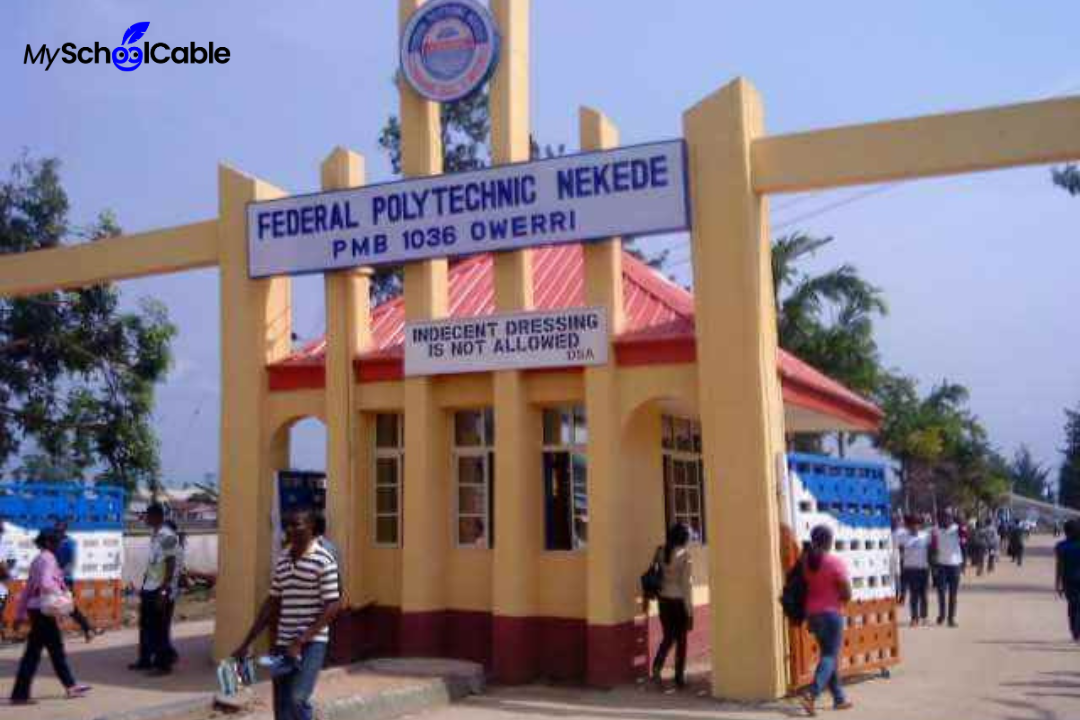
    7. Federal Polytechnic, Nekede

    • Established: 1978
    • Location: Imo State

    Federal Polytechnic, Nekede, is well known for its broad programs in engineering, management, and technology. With ICT labs and practice-based training, it makes graduates competitive globally.

    The exemplary qualities of Nekede Poly are:

    • Trains highly skilled and innovative graduates.
    • Furnished with state-of-the-art ICT and engineering labs.
    • Is engaged in research and technology projects at the national level.

    8. The Polytechnic, Ibadan

    • Founded: 1970
    • Location: Oyo State

    Ibadan Polytechnic is one of the oldest and most well-known polytechnics in Nigeria. With a good image in academics and mature lecturers, it operates ND and HND programs in engineering, science, and management.

    Reasons why students like Ibadan Poly:

    • Reputation in academics for technical and practical education.
    • An extremely high number of successful graduates.
    • Offers additional professional certifications.

    Also Read – 15 Best Scholarships for PA School

    9. Federal Polytechnic, Bida

    • Established: 1977
    • Located in: Niger State

    Federal Polytechnic, Bida, is said to develop students’ technical skills and foster innovation. It offers a vast array of technology, engineering, management, and environmental science courses.

    Bida Poly features:

    • Good workshops and laboratories for practical training.
    • Emphasis on technical skill and entrepreneurship.
    • Good student life with varied activities.

    10. Federal Polytechnic, Ado-Ekiti

    • Established: 1977
    • Location: Ekiti State

    Federal Polytechnic, Ado-Ekiti, is famous for its integration of academic brilliance and experiential, practical study. The institution fosters entrepreneurship and innovation in students and is, therefore, an excellent option for aspiring students.

    Why Ado-Ekiti Poly stands out:

    • Employ innovative and student-focused learning techniques.
    • State-of-the-art laboratories and workshops.
    • Excellent entrepreneurship and start-up guidance.

    Read Also – 10 Best Colleges for Soccer Scholarships

    Why Attend a Polytechnic in Nigeria in 2025?

    Studying at a polytechnic provides you with exposure to:

    • Practical technical skills in engineering, IT, agriculture, and applied science
    • Career-oriented ND/HND programs with job opportunities soon after
    • Entrepreneurial and career-oriented skill opportunities
    • Less expensive and shorter study time than federal universities on average

    As Nigeria’s economy evolves, employers and new companies more and more look for hands-on, technical expertise—and polytechnics deliver.

    How to Choose the Proper Polytechnic in Nigeria

    Bear the following in mind before application:

    • Accreditation – Ensure your course is NBTE-accredited
    • Academic Strength – Research-active departments and departmental rankings
    • Campus Facilities – Modern labs and workshops
    • Location & Fees – Fees comparison, cost of living, safety
    • Industry Partnerships – Internship for job prospects
    • Campus Life & Services – Accommodation for students, counseling, and student bodies
    • Entrepreneurship Support – Provision of business incubation centres

    Also Read – 10 Business Ideas for Students in Nigeria

    Admission Requirements for ND and HND Programs

    To be admitted into any of the best polytechnics in Nigeria, you generally require:

    ND (National Diploma):

    • SSCE/NECO with 5 credits in Maths, English, and related subjects
    • JAMB UTME (optional sometimes for direct entry)

    HND (Higher National Diploma):

    • ND in the relevant field with a minimum CGPA of 2.50
    • Post-ND Industrial Training (usually 1 year)
    • ND Transcript and Certificate

    Will a Polytechnic Degree Get Me a Good Job?

    Yes. Polytechnics prepare for work. That’s their strongest selling point. Employers prefer to hire polytechnic graduates for technical and practical careers. Also:

    Some industries welcome polytechnic graduates. They are construction, manufacturing, oil and gas, IT support, and hospitality.

    Soft skills matter. If you have communication and teamwork skills, you have a better chance.

    Internships are well compensated with a lot of mileage. Employers will also pick from within their intern pool. So do the internships phenomenally.

    Reputation matters, yes. But in technical fields, working skills and on-the-job experience matter more.

    Read Also – Aviation Schools in Nigeria

    Tips for Getting In and Succeeding

    • Prepare for the Post-UTME examination if it is required, especially in public polytechnics
    • Apply early so as not to miss the first-choice course or campus
    • Participate in practical workshops to gain skills through practice
    • Be part of departmental clubs to connect with the industry and the alumni network
    • Use entrepreneurship units to incubate internships and start-ups
    • Keep CGPA not lower than 2.50 to be eligible for entry into HND

    Frequently Asked Questions (FAQs)

    How do I know the best polytechnic for my course?

    Consider accreditation of programs, quality of lab, faculty, and industry relationships in your chosen field.

    Are polytechnic certificates internationally accepted?

    Yes. ND/HND are highly accepted all over the world, especially in applied engineering, ICT, and technical science.

    Can I apply for HND directly?

    You must first complete ND with a minimum 2.50 CGPA and 1-year industrial training.

    How many years is the ND and HND course?

    ND is 2 years typically; after industrial training, HND is another 2 years.

    Conclusion

    Best polytechnics in Nigeria have an important role to play towards the youth of tomorrow as they equip them with ground experience, technical knowledge, and industry training. Each one of these polytechnics possesses a strength that is different from the rest, from engineering and ICT to business and entrepreneurship.

    Whether you want hands-on experience, access to state-of-the-art facilities, or exposure to real industries, these polytechnics provide the perfect platform to excel in this competitive age.

    Choosing from Nigeria’s top 10 polytechnics is an investment in a career equally balanced in theory and practice, and you will be a successful graduate ready to contribute towards the growth and development of the country.

    References

    Recommendations

  • Caleb University School Fees | 2025/2026 Updated Guide 

    Caleb University School Fees | 2025/2026 Updated Guide 

    Caleb University School Fees are among the best things future students and parents would wish to learn before joining the school.

    Caleb University is a Lagos private university that is among the highest-rated universities in Nigeria. Having a serene campus, high-tech facilities, and rigorous academic programs, it provides students with a complete learning experience.

    But other than the reputation and learning culture, the largest mystery is this: how much is it to learn at Caleb University? Having some knowledge of the fees is important because it enables parents to prepare without joyriding.

    In this new 2025/2026 handbook, we are going to take you through a basic breakdown of Caleb University School Fees, including tuition, accommodation, extra charges, and mode of payment. From this article, you will be familiarized on how to make a good budget plan.

    About Caleb University

    Caleb University is a private Christian university located in Imota, Lagos State, Nigeria. It is famous for academic proficiency, moral instruction, and entrepreneurial skills training and boasts some undergraduate and postgraduate courses in various faculties.

    Caleb University, in the course of time, has been a destination of choice in the provision of quality education in a safe and well-organized venue of learning.

    Read Also – Bamidele Olumilua University Cut-off Mark | Courses, Cut-off Mark and Requirements 

    Overview of Caleb University School Fees

    Located in Imota, Lagos State, Caleb University is a reputable private Christian university committed to character development and learning among its students.

    Established in 2007 by Prince Oladega Adebogun, who is a business-driven and philanthropic visionary, Caleb University is accredited by the National Universities Commission (NUC) and has nine colleges offering undergraduate and postgraduate degree courses in fields such as Engineering, Law, Basic and Applied Sciences, and others.

    Caleb University fees are usually structured according to college and course of study. Both fresh and stale students are to pay the stipulated fees per semester or session.

    Accommodation fee, tuition fee, acceptance fee, medical/fitness charges, etc., constitute the total school fees. Departmental fees, depending on your course of study, also exist.

    Also Read – 15 Cheapest Schools in Canada for International Students

    Caleb University School Fees

    Below is Caleb University school fees for the 2025/2026 academic year. The fees vary based on the faculty, level, and course of study of the student. They include accommodation fees, acceptance fees, tuition fees, etc.

    Acceptance Fee (Only Freshers)

    • Acceptance Fee: ₦200,000 (non-refundable)

    School Fees Breakdown by Faculty

    FacultyProgramFreshers (₦)Returning Students (₦)
    College of Environmental Sciences and ManagementArchitecture, Building, Estate Management1,200,0001,100,000
    College of Pure and Applied SciencesMicrobiology, Biochemistry, Computer Science1,100,0001,000,000
    College of Social and Management SciencesAccounting, Business Administration, Mass Communication1,000,000900,000
    College of LawLaw1,500,0001,400,000

    Accommodation and Hostel Fees

    • Normal Hostel: ₦200,000 per session
    • Premium Hostel: ₦300,000 per session
    • Executive Hostel: ₦400,000 per session

    Other Compulsory Charges

    Medical Fee: ₦25,000

    Library Fee: ₦20,000

    ICT Development Fee: ₦30,000

    Sports Fee: ₦10,000

    Lab/Studio Fee (For Science & Architecture Students): ₦50,000

    Matriculation Fee (Freshers Only): ₦15,000

    Read Also – Osun State University Admission丨Requirements and Courses

    How to Pay Caleb University School Fees

    Caleb University has made payment of school fees online or offline very simple and hassle-free. You may choose any of the following payment options:

    Online Payment:

    You can pay your school fees through debit card, credit card, or bank account online. To make the payment through online mode, just follow the steps:

    • Visit the university website at www.calebuniversity.edu.ng and click on the “Pay Fees” link.
    • Enter your matriculation number and select your programme, level, and mode of study.
    • Click “Proceed” to view your fee details and amount payable.
    • Click “Pay Now” to go to the payment gateway.
    • Choose your preferred mode of payment and follow directions to make payment.
    • Print your payment receipt and retain for future reference.

    Bank Deposit:

    You can pay your school fee by direct bank deposit into the university’s bank account. Bank deposit payment is executed as follows:

    • Go to any of the listed banks indicated on the university website and acquire a bank teller.
    • Fill in your name, matric number, programme, level, study mode, and amount to pay in the bank teller.
    • Pay the amount at the cashier point and obtain your payment slip.
    • Visit the Caleb University website at www.calebuniversity.edu.ng and click on the “Pay Fees” link.
    • Enter your matriculation number and select your program, level, and mode of study.
    • Click on the “Proceed” button to view your fee details and amount payable.
    • Click on the “Verify Payment” button and enter the bank deposit details.
    • Print out your payment slip and keep for future reference

    POS Payment

    You may pay your school fees through a POS machine at the university bursary office. To pay through POS, follow these steps:

    • Visit the university bursary office and show your credit card or debit card to the cashier.
    • Advise the cashier of your name, matriculation number, study program, study level, and study mode, and the amount to be paid.
    • Swipe your card in the POS machine and enter your PIN.
    • Keep your payment slip for future use.

    You are also to notice that you will have to pay your school fees within the payment deadline stipulated by the university. In case of default, you will be charged penalties, which could be late payment fees, cancellation of admission, or suspension of registration. You are also requested to keep your payment slips in safe custody for any possible verification or refund.

    Also Read – Mcpherson University Admission | Courses, Requirements and Procedure

    Payment Conditions for Caleb University School Fees

    All payments should be to the designated bank accounts of the university or through the permitted online payment gateway. Students are advised to keep all payment receipts. Part payment plans are acceptable but should be preceded by the bursary department.

    Key Reminders:

    • Penalty fee for late payment is ₦50,000.
    • The acceptance fee must be paid before registration can start.
    • Allocation to the hostel is on a first-come, first-served basis.
    • The university administration determines fees.

    Frequently Asked Questions

    Does Caleb University Accept Transfer?

    Yes, Caleb University accepts transfer students within and outside Nigeria. The university has relevant support services to aid the transition of foreign students without any issue.School supplies

    What is Caleb University Cut Off Mark?

    The cut off mark level for admission into Caleb University during the 2025/2026 academic year is 160. All candidates who had a score of 160 and above in the UTME (JAMB) are qualified to apply for admission.

    Does Caleb University Accept Installment Payments?

    Yes, the payment can be in installments. The session balance fee can be paid in no more than three (3) installments as follows: 50% prior to resumption, 25% prior to first semester examinations, and the remaining 25% prior to second semester resumption.

    Does Caleb University Accept Direct Entry Students?

    Yes, Caleb University is a direct-entry accepting institution. Applicants who wish to enter by Direct Entry should be holders of qualifications higher than the minimum UTME levels, i.e., A-Level passes, or their equivalent.

    Conclusion

    In summary, Caleb University school fees for the 2025/2026 academic session are based on the faculty, level of course study, and mode of accommodation. Fresh and returning students have to become familiar with the fees and settle before to avoid a penalty.

    Caleb University remains at the top of any student’s agenda looking for quality education in a conducive learning environment, and having their fee structure is the key to a disturbance-free process of acquisition. 

    For more information on tuition fees, scholarships, and admission procedures, always refer to the Caleb University official website or contact the school’s bursary office directly.

    References

    Recommendations

  • Bamidele Olumilua University Cut-off Mark | Courses, Cut-off Mark and Requirements 

    Bamidele Olumilua University Cut-off Mark | Courses, Cut-off Mark and Requirements 

    If you are willing to study at Bamidele Olumilua University of Education, Science and Technology (BOUESTI), there is something you should know very well and that is the Bamidele Olumilua University Cut-off Mark. The amount indicates whether you can apply for admission or not.

    For 2025/2026 session, the cut-off mark of 150 is established by the university. This means that any candidate who scores 150 and above in the UTME is qualified to apply for admission and proceed to participate in the Post-UTME screening.

    For last year’s admission, the cut-off was 140, so the level differs depending on the admission session.

    Now let us dissect it totally so that you not just get the cut-off mark but also courses, requirements, and how you can get admitted to BOUESTI.

    What Exactly Is a Cut-off Mark?

    You see, the majority of students get confused when they hear about cut-off mark. In simple terms, it is the lowest UTME score by which a university will decide to offer you admission.

    For example:

    • If the Post-UTME cut-off mark for Bamidele Olumilua University is 150, and your score is 149, then you are not qualified to apply for Post-UTME.
    • And if your score is 150 and above, then you are qualified.

    It is important to understand that to clear the cut-off mark only makes you eligible. It does not necessarily mean your admission. Having cleared this stage, you are still vying with other candidates for available job opportunities within each department.

    Think of it as a door: the cut-off mark is the key that opens the door, but after entering, you still have to shine to be picked. 

    Read Also – Unilag Cut Off Mark for All Courses

    Institutional vs Departmental Cut-off Mark

    There are two types of cut-off marks which you ought to know:

    1. Institutional Cut-off Mark

    This is the institutional stamp made by the school for all candidates presenting in one academic year. In this BOUESTI case, the institutional cut-off mark is 150. No matter what course you present to, if your mark is below this, you are not qualified to present.

    2. Departmental Cut-off Mark

    When candidates sit for Post-UTME, various departments set their own cut-off mark based on how competitive the course has been. For example:

    • Courses like Computer Science, Mass Communication, Criminology, and Engineering will have departmental cut-offs of 170–180.
    • Less competitive courses like some Education courses or Agricultural courses will have departmental cut-offs of 150–160.

    This means that although you meet the general cut-off, you will not be accepted unless you meet your department’s cut-off. 

    Also Read – Adekunle Ajasin University Admission | Requirements and Procedures

    Courses Offered at Bamidele Olumilua University

    Bamidele Olumilua University is not an ancient university but has a vibrant array of programmes spread across multiple faculties. It is good to know what they offer so that you can make appropriate applications. Here is the breakdown:

    1. College of Science and Technology

    The department handles science and technical courses. Signature programmes are:

    • Computer Science
    • Microbiology
    • Industrial Chemistry
    • Physics with Electronics
    • Food Science and Technology
    • Biochemistry

    2. College of Education

    Education is the core of BOUESTI because it began life as a College of Education. Courses are:

    • Education in Mathematics
    • Education in Biology
    • Education in Chemistry
    • Education in Business
    • Guidance and Counselling

    3. College of Engineering and Technology

    This college is for those who are interested in construction, design, and innovation. Courses are:

    • Civil Engineering
    • Mechanical Engineering
    • Electrical and Electronics Engineering
    • Architecture
    • Building Technology

    4. College of Management and Social Sciences

    This encompasses business, politics, and studies of human behavior. Programmes are:

    • Accounting
    • Business Administration
    • Economics
    • Political Science
    • Mass Communication
    • Criminology and Security Studies

    These courses offer prospective students from differing backgrounds numerous opportunities, depending on their career choices.

    Read Also – How to Apply for a CSCS card in the UK?

    General Admission Requirements at BOUESTI

    Acquiring the cut-off mark is half the problem. You will still be required to satisfy the admission requirements. Here is how BOUESTI desires the applicants to satisfy its demands:

    1. UTME Score

    You should acquire the institutional cut-off mark (currently 150) in JAMB UTME.

    2. O’Level Results

    You should have a minimum of five (5) credit passes in WAEC/NECO/GCE or equivalent and not exceeding two sittings. Mathematics and English Language are needed for majority of courses.

    3. UTME Subject Combination

    The JAMB subjects you took must be the same as the course you wish to study. Computer Science, for example, requires Mathematics, Physics, Chemistry, and English. If you take the wrong subject combination, you are disqualified.

    4. Direct Entry

    If you want to enter via Direct Entry, then you must possess an NCE, ND, HND, or their equivalent. Depending on your performance, you are offered admission to 2the 00-level.

    These are conditions that ensure candidates are well-equipped to perform in the courses that they apply for.

    Also Read – 4 Years Science Courses in Nigeria

    How the Post-UTME Screening Process Works

    Post-UTME screening is the second process after JAMB. Below is how it works step by step:

    1. Registration: Shortlisted students log on to the BOUESTI Post-UTME admission site to register.

    2. Payment: Registration is facilitated at a screening fee.

    3. Submission of Details: Students enter their JAMB score, O’Level score, etc.

    4. Review of Results: The university filters the students based on their scores and results. In some instances, in some years, BOUESTI even conducts physical tests or online exams.

    5. Admission List: After screening, admission lists are posted on JAMB CAPS as well as the school’s website.

    The screening is carried out to provide equality and transparency in admitting qualified candidates.

    Departmental Cut-off Mark: What to Expect

    Departmental cut-off marks will be above the institutional cut-off for competitive courses. Example:

    • Computer Science / Engineering / Architecture: 170–180
    • Mass Communication / Criminology / Business Administration: 160–170
    • Education / Agricultural Programmes: 150–160

    This is to note that the overall cut-off mark is 150, but depending on what course you pursue, it is the actual score that you possess that decides whether you are going to be at an advantage or not.

    Read Also – University of Abuja Courses

    Appropriate UTME Subject Combinations (Examples)

    Passing the appropriate subject combination is important because JAMB and the universities do not play around. Below are some examples of BOUESTI courses:

    • Computer Science: English, Mathematics, Physics, Chemistry
    • Civil Engineering: English, Mathematics, Physics, Chemistry
    • Mass Communication: English, Literature in English, Government, one other subject
    • Economics: English, Mathematics, Economics, one other (like Government or Geography)
    • Political Science: English, Government, CRS/IRS, one other subject

    Always cross-check subject requirements on JAMB Brochure or BOUESTI’s portal before applying.

    How to Apply for BOUESTI Post UTME

    • Visit https://portal.bouesti.edu.ng/
    • Click on Admissions
    • Click on Apply for Admission
    • Create a new account.
    • Supply all the required details including active email and personal telephone number.
    • You will get a verification mail
    • After successful registration, LOGIN into account with the email address used during opening of the account as the “Username”; and the password used during sign-up.
    • On your dashboard, select the application type (2025/2026 POST UTME application)
    • Enter your UTME Registration Number
    • To make the payment for the Two thousand naira (N2000) application fee, click “PAY NOW”, you will be directed to an online payment platform
    • Once paid, your Application Form will be made available for you to complete; please attach passport as a JPEG file.

    Also Read – National Open University Courses and Requirements

    School Fees and Fees Information

    Recording school fees for planning is important. Fees and tuition may vary across programs. Fees aim to be worthwhile without compromising accessibility by academic session.

    • Fees for Tuition: Normally ₦100,000 – ₦200,000 per academic session.
    • Other Fees: Registration fee, laboratory fee, and boarding fee.

    Stay updated with scholarship programs or grant releases that are introduced with the university. Such programs can help you to counter your financial concerns as you pursue your studies.

    Increasing Your Admission Chances

    1. Score better than the cut-off: The higher you score, the greater your chance of clearing departmental cut-offs.

    2. Choose better combinations of courses: Good grades will be in vain if you have chosen inappropriate courses.

    3. Choose BOUESTI as first option: The institution prefers students who choose it as first option.

    4. Upload O’Level results to JAMB CAPS: Failure to do this will render JAMB unable to process your admission.

    5. Prepare for Post-UTME: Preparing for rehearsal tests increases confidence levels.

    6. Stay updated: Always obtain official information from the BOUESTI portal instead of believing social media speculations.

    Read Also – University of Abuja Admission  | Requirements and Courses

    Common Student Mistakes to Avoid

    Some students lose admission, not because of poor scores, but as a result of avoidable mistakes such as:

    • Wrong subject combination in JAMB.
    • Failure to make BOUESTI their first choice.
    • Failure to meet Post-UTME registration deadlines.
    • Following misleading admission news on social media instead of visiting the portal.

    Steering clear of these mistakes will increase your chances of success.

    Frequently Asked Questions

    What is the Bamidele Olumilua University Cut-off Mark for 2025/2026?

    Cut-off mark is 150 for admission year 2025/2026.

    Scoring 150 does it guarantee admission?

    No. It only makes you eligible. Admission will depend on your department and the competitiveness of the course.

    What was the cut-off mark last year?

    For 2024/2025 session, it was 140.

    What if I don’t make the cut-off mark?

    You won’t be eligible for BOUESTI Post-UTME screening. You can apply to another institution, apply for pre-degree, or retake UTME.

    Do Direct Entry candidates also have cut-off points?

    Direct Entry candidates don’t use JAMB UTME results but must meet the qualification and O’Level requirements of BOUESTI.

    Where do I find the departmental cut-off points?

    They are usually put up after Post-UTME registration on the school portal for admission.

    Final Thoughts

    Bamidele Olumilua University Cut-off Mark is the first thing you have to meet before you can proceed to apply for admission. Even though the cut-off mark for 2025/2026 is going to be 150, some of the courses will be requiring higher grades.

    It is therefore always advisable to target a bit above the general cut-off mark, choose the correct subject combination, and get the latest information through the official BOUESTI portal.

    By avoiding common mistakes and through proper preparation, you stand a good opportunity of being admitted to your choice course at BOUESTI.

    References

    • myschool.ng – BOUESTI Post-UTME 2025: cut-off mark, eligibility and registration details
    • learnskills.ng – What Is the Cut Off Mark for Bamidele Olumilua University?

    Recommendations